



If you’ve walked into your bathroom and been hit with that stale, damp smell, you’re not alone. It’s one of the most common complaints I hear from homeowners, especially after the colder, wetter months. Even bathrooms that look spotless can develop a musty odour over time.
Sometimes the issue crops up not long after a bathroom renovation, which can be frustrating. You’ve invested in new tiles and fittings, yet there’s still a smell hanging around. The good news is it’s usually something fixable once you know what you’re dealing with.
Let’s break down the most common reasons your bathroom smells damp and what you can do about it.
Main causes of damp smells
Poor ventilation
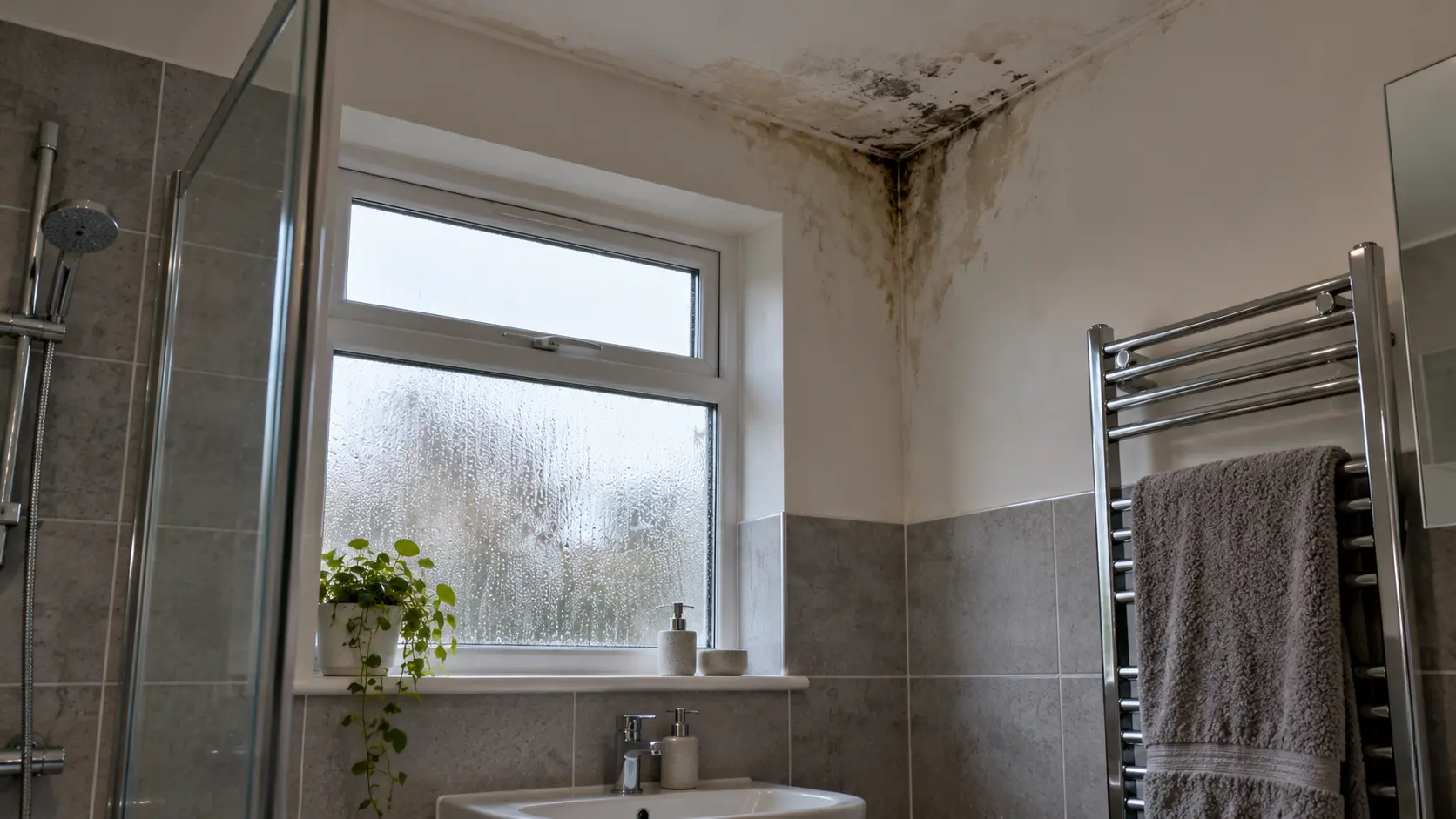
By far the biggest culprit is poor ventilation. Every time you run a hot shower, you’re filling the room with steam. If that moisture has nowhere to go, it settles on ceilings, behind tiles and into grout lines.
I see this a lot in homes around Evesham and Pershore where older bathrooms either have a faulty extractor fan or no fan at all. People rely on opening a window, but in winter that window often stays firmly shut.
If steam lingers on mirrors for more than a few minutes after your shower, chances are the air isn’t being cleared quickly enough.
Hidden leaks
A slow leak under the bath or behind the toilet can create a persistent damp smell without any obvious puddles. Over time, even a small drip can soak into floorboards or plasterboard.
Common sources include:
- Loose toilet pan connectors
- Worn silicone seals around baths and showers
- Dripping pipe joints under basins
- Cracked grout allowing water behind tiles
I’ve lifted plenty of bath panels in Broadway properties to find blackened timber and soaked dust where a tiny leak’s been quietly causing trouble for months.
Mould and mildew
Mould thrives in warm, damp environments. You might spot black marks in the corners of the ceiling or around window frames, but mould isn’t always visible. It can sit behind boxing, under shower trays or inside stud walls.
Even if you clean surface mould regularly, the smell will return if the underlying moisture issue isn’t sorted.
Trapped moisture in soft materials
Bath mats, wooden flooring, vanity units and even laundry baskets can hold moisture. If your bathroom doesn’t fully dry out between uses, fabrics and timber absorb damp and slowly release that musty odour.
This is particularly common in family homes where multiple showers happen back to back in the morning.
How to identify the source
Before jumping to conclusions, it’s worth doing a bit of basic detective work.
Start by asking yourself a few practical questions:
- Does the smell get worse after showers?
- Is it stronger near the bath, basin or toilet?
- Are there visible mould spots on ceilings or grout?
- Does the extractor fan actually clear steam or just make a noise?
Lift the bath panel if you can do so safely and check for damp patches. Look inside vanity cupboards for swelling or peeling finishes. Run your hand along the floor near the toilet base and see if it feels slightly soft.
If you notice staining on ceilings below the bathroom, that’s a sign water may be escaping and tracking downwards.
Practical fixes and prevention tips
Once you’ve narrowed it down, there are straightforward steps you can take.
Improve ventilation
If your extractor fan is weak or noisy, it might be time for a replacement. Modern fans with humidity sensors kick in automatically and continue running until moisture levels drop.
Make sure the fan vents properly to the outside, not just into the loft. I still come across fans venting into roof space which simply shifts the condensation problem elsewhere.
After showering, leave the fan on for at least 15 to 20 minutes and keep doors closed so steam isn’t spreading through the house.
Reseal and repair
Old, cracked silicone should be removed and replaced properly. It’s a simple job but makes a big difference in keeping water where it belongs.
Regrouting tiles and tightening up fittings can stop water creeping behind surfaces.
Deep clean problem areas
Use a proper anti mould cleaner on affected areas, not just a quick wipe with standard spray. Wash bath mats regularly at a high temperature and avoid leaving damp towels on the floor.
If flooring is badly water damaged, it may need replacing. In some cases, upgrading to a fully tanked wet room setup can prevent recurring damp issues. If mobility is also a concern, it’s worth looking at properly designed mobility bathrooms that are built with effective drainage and ventilation in mind.
If you’re nearby and considering a larger upgrade, you can explore options for bathrooms in Evesham, Pershore or Broadway to see what a properly installed system looks like.
When to call a professional plumber
If the smell persists despite cleaning and improving ventilation, it’s time to get it checked.
You should call in a professional if:
- You suspect a hidden leak
- Flooring feels soft or spongy
- There are water marks on ceilings below
- Mould keeps returning quickly after treatment
Damp left unresolved can lead to structural damage and more costly repairs down the line. I’ve seen simple sealant jobs turn into full floor replacements because the issue was ignored for too long.
A proper inspection will usually pinpoint the problem quickly. Sometimes it’s minor, other times it highlights the need for better layout, upgraded ventilation or a more comprehensive refit.
Conclusion and next steps
A damp smelling bathroom isn’t just unpleasant. It’s usually a sign that moisture isn’t being managed properly. Whether it’s poor airflow, a hidden leak or worn out seals, the sooner you deal with it, the easier and cheaper it tends to be.
If you’re unsure where the smell is coming from or want honest advice on repairs or improvements, the team at Enviroplumb are always happy to help.
Can’t track down where the smell’s coming from? Get in touch and we’ll come and find the cause, whether it’s a quick reseal or something bigger.