



Oil boilers should be serviced every year, ideally before the heating season starts. Oil burners are more sensitive than gas ones: the nozzle, filter and burner settings wear or clog over a year of use, and a small change can make the boiler burn dirtier, use more oil and break down more often.
An annual service by a competent technician, ideally OFTEC registered, keeps the boiler efficient, reliable and safe, and is usually required for the manufacturer’s warranty. Our oil boilers page covers the systems we look after.
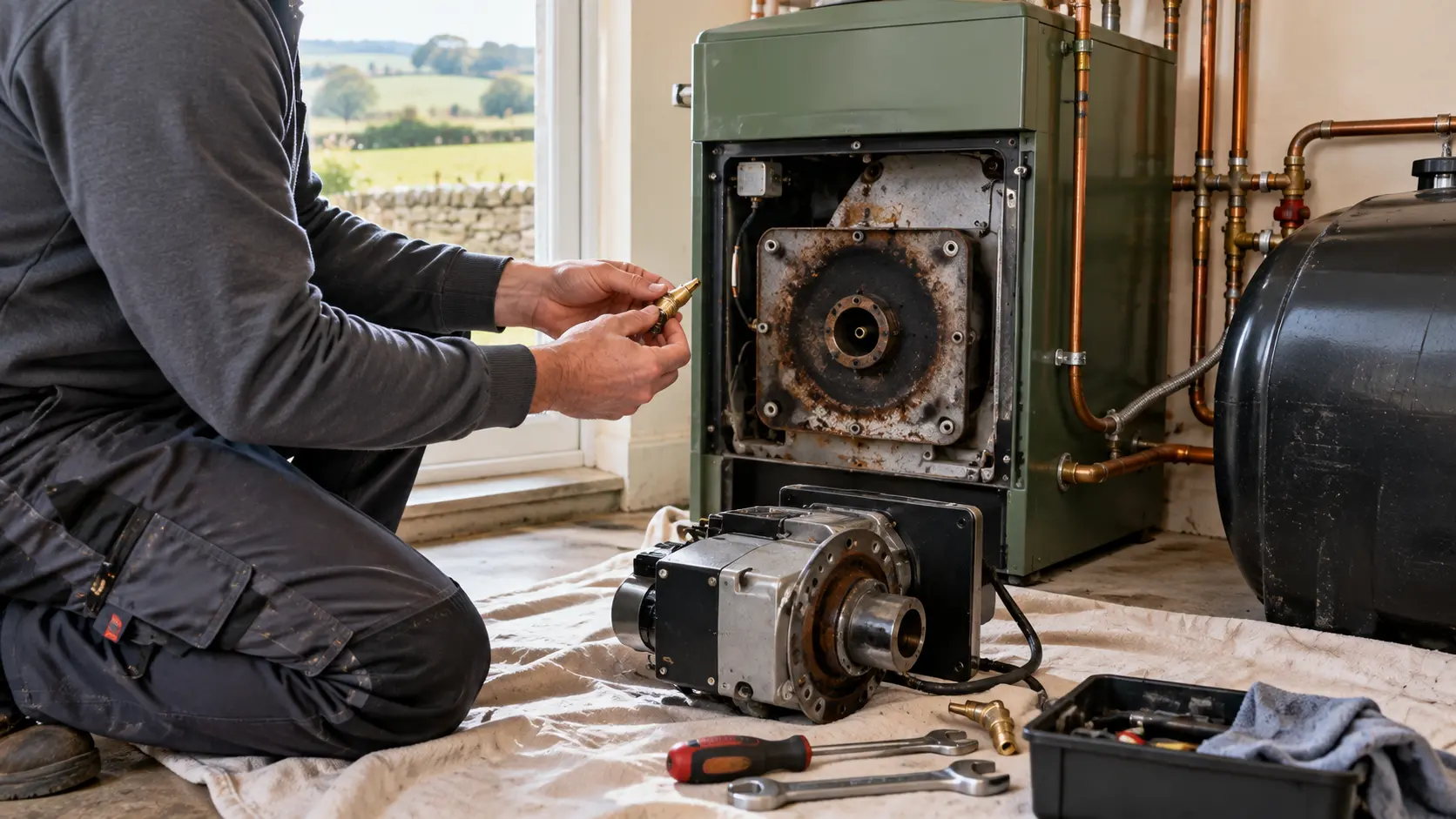
Why oil boilers need yearly servicing
An oil boiler sprays a fine mist of oil through a nozzle and mixes it with air before burning it. Over time:
- The nozzle wears, changing the spray pattern
- Filters collect sludge and debris from the oil
- Soot builds up on the heat exchanger
- Air and oil settings drift from where they should be
Each of these reduces efficiency and increases the chance of lockouts. Soot build-up in particular acts as an insulator, so less heat reaches the water and more is lost up the flue.
What an oil boiler service includes
A typical service covers:
- Replacing the nozzle and cleaning the burner
- Changing or cleaning filters, at the boiler and sometimes at the tank
- Cleaning the heat exchanger and baffles to remove soot
- Checking seals and gaskets
- Combustion analysis to set the burner correctly
- Checking the flue and ventilation
- Inspecting the oil supply line and fire valve
- A visual check of the oil tank and its base
Signs your oil boiler needs attention now
- The boiler keeps locking out and needs resetting
- Black smoke or a strong oil smell from the flue
- Soot around the flue terminal
- The boiler is noisier than usual or rumbles when it fires
- Oil use has gone up without a change in how you heat the home
- Radiators or hot water not getting as hot as normal
If you notice oil leaking from the tank or supply pipe, turn off the supply valve if it’s safe and contact a technician. Keep leaked oil away from drains and watercourses.
Looking after your oil tank
The tank matters as much as the boiler. Between services, keep an eye on:
- Cracks, bulges or splits in plastic tanks
- Rust or weeping seams on steel tanks
- The base, which should be stable and level
- The bund, which should be free of water and debris
- Vegetation, kept clear around the tank
An ageing or damaged tank is one of the main causes of oil spills, which can be expensive to clean up.
Oil boilers in rural Worcestershire
Many homes in villages around Worcester, Malvern, Pershore and Evesham are off the gas grid and rely on oil. Getting the service done in late summer or early autumn means any repairs happen before the first cold snap, when heating engineers are busiest and a lockout is most inconvenient.
If your oil boiler is getting old or unreliable, it may be time to weigh up a replacement. Our guide on oil boiler replacement options looks at the choices, and our boiler installations page covers new systems.
Frequently asked questions
How long does an oil boiler service take?
Usually longer than a gas boiler service, because of the nozzle change and cleaning involved. Allow a couple of hours, depending on the boiler and how much cleaning it needs.
Do I need an OFTEC registered technician?
OFTEC registration is the recognised competence scheme for oil heating. Using a registered technician is strongly recommended and may be needed for warranty and some Building Regulations work.
Is oil boiler servicing a legal requirement?
Not for homeowners, but it’s usually a warranty condition and the best way to prevent breakdowns. Landlords have a general duty to keep heating appliances safe.
Book your oil boiler service
Is your oil boiler due its service, or showing signs of trouble? Get in touch and we’ll arrange a visit.