Industrial bathrooms have moved well beyond city lofts and warehouse flats. We are now fitting them into Victorian terraces in Malvern, new builds in Malvern Link and even barn conversions around Barnards Green. Done properly, this style feels solid, practical and quietly striking. If you are planning a bathroom refurbishment, industrial design is well worth considering.
What makes it so popular is its honesty. Materials are left looking like what they are. Brass looks like brass, steel looks like steel and brick looks like brick. It suits homeowners who want something a bit different from glossy white suites and chrome everything, but still want a space that works day to day.
Industrial Bathroom Design and Its Appeal
The industrial look is inspired by old factories and workshops. Think exposed pipework, robust fittings and simple colour palettes. It sounds cold, but when you design it thoughtfully it can feel warm and welcoming.
A lot of customers ask whether it will date quickly. In our experience, it holds up very well because it is based on timeless materials rather than trends. Black frames, matte finishes and natural textures tend to age better than high gloss finishes that go in and out of fashion.
It also works nicely in properties across the Malvern area where there is already character in the building. High ceilings, exposed beams or older brickwork all lend themselves naturally to this style.
Key Features of Industrial Style Bathrooms: Materials, Colours, Fixtures
If you want to get the look right, start with materials. Industrial design is all about texture and contrast.
Materials
Common materials we install in industrial bathrooms include:
- Concrete or concrete effect tiles for floors or feature walls
- Exposed brick or brick slip tiles
- Reclaimed wood for vanity units or shelving
- Metal framed shower screens
- Steel or cast iron baths
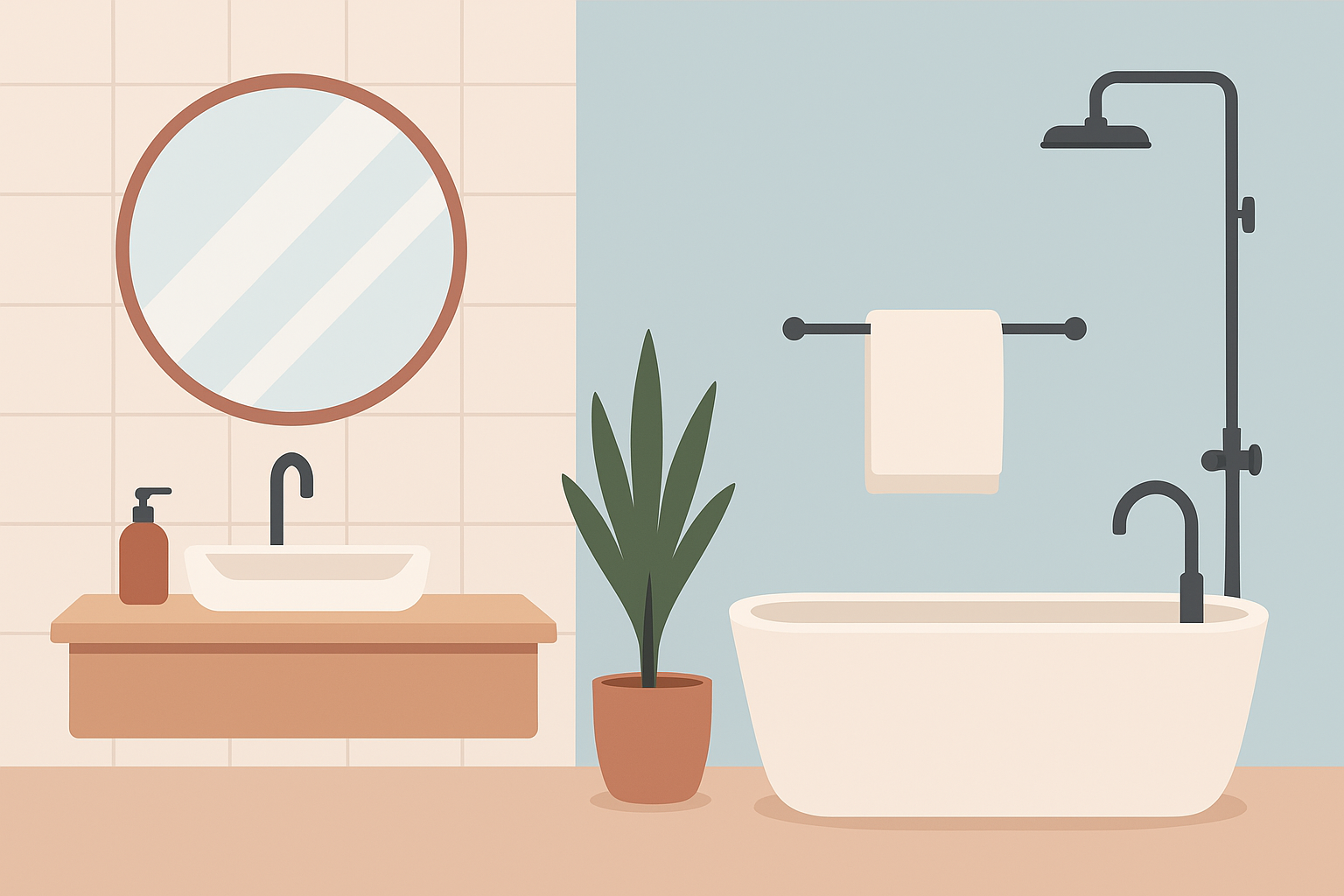
You do not have to use all of these. Even a simple black metal shower enclosure against neutral tiles can create that workshop feel without overpowering the room.
Colours
The typical palette leans towards greys, blacks and earthy tones. That said, we often soften the look with warm lighting and timber to stop it feeling too stark.
In smaller bathrooms in places like Great Malvern, lighter concrete effect tiles combined with matte black taps work well. You get the industrial edge without making the space feel boxed in.
Fixtures and Fittings
This is where the detail really comes in. Industrial style fixtures often include:
- Wall mounted taps with visible pipework
- Matte black or brushed brass finishes
- Large rainfall shower heads
- Open shelving instead of closed cabinets
- Bold statement mirrors with metal frames
We are seeing more homeowners step away from standard chrome and choose brushed brass or gunmetal. It adds depth without being flashy.
How to Incorporate Industrial Design in Small and Large Bathrooms
The size of your room makes a difference, but industrial style can be adapted either way.
Small Bathrooms and Ensuites
In compact bathrooms in Malvern Link , the key is restraint. Too many dark finishes will shrink the space.
Try:
- A walk in shower with a black framed glass panel
- Light grey or stone effect wall tiles
- A floating vanity unit in wood or matte charcoal
- Feature lighting such as simple wall mounted pendant lights
We often suggest wall hung WCs in smaller rooms. They free up floor space and make cleaning easier, which is always one of the first practical questions people ask.
Larger Bathrooms
If you have more room to play with, perhaps in a detached property around Barnards Green, you can be a bit bolder.
Freestanding baths in matte black or traditional roll top cast iron look fantastic against a concrete style wall. You can also divide the space using crittall style shower screens to create zones without blocking light.
This is also where underfloor heating comes into its own. Concrete look floors feel authentic but can be chilly in winter. Good heating beneath keeps it practical, especially in older Malvern homes where floor temperatures can drop more than expected.
Practical Tips, Costs, and When to Consider a Professional Refurbishment
Before diving in, think about how the bathroom is actually used. An industrial design still needs to cope with busy mornings, damp towels and plenty of cleaning.
Some practical tips we regularly share:
- Choose quality finishes that will not flake or tarnish quickly
- Make sure exposed pipework is installed neatly and within regulations
- Consider storage carefully if you are opting for open shelving
- Balance dark elements with good lighting
Budget wise, you can introduce industrial touches quite affordably by changing taps, lighting and screens while keeping the existing layout. A full refurbishment with structural changes, new plumbing and bespoke furniture is obviously more involved and benefits from experienced trades.
If accessibility is a concern, industrial design can be combined with practical solutions such as those found in mobility bathrooms. It does not have to look clinical to be safe and usable.
It is also worth visiting a proper showroom to see finishes in person. Photos online rarely show how a brushed brass tap actually feels or how textured a tile is. A look around a local bathroom showroom can help you avoid costly mistakes.
When the job involves moving pipework, altering drainage or installing heavy materials like cast iron baths, professional input is essential. Industrial style often exposes features that would normally be hidden, so the workmanship needs to be spot on. That is where experience really matters. At Enviroplumb we have worked on everything from tight terraces to large family homes across Malvern and understand how to get that balance between bold design and everyday practicality.