



Condensation is one of the most common issues I see in homes across Worcestershire. It often gets blamed on “damp”, but in many cases it is simply warm, moist air with nowhere to go. I’ve walked into plenty of properties where the windows are streaming and the bathroom ceiling is speckled with mould just months after a bathroom renovation, simply because ventilation was not thought through properly.
The good news is that most condensation problems can be improved without major building work. You just need to understand why it’s happening and tackle it in a practical way. Here’s a straightforward guide based on what I see day in, day out.
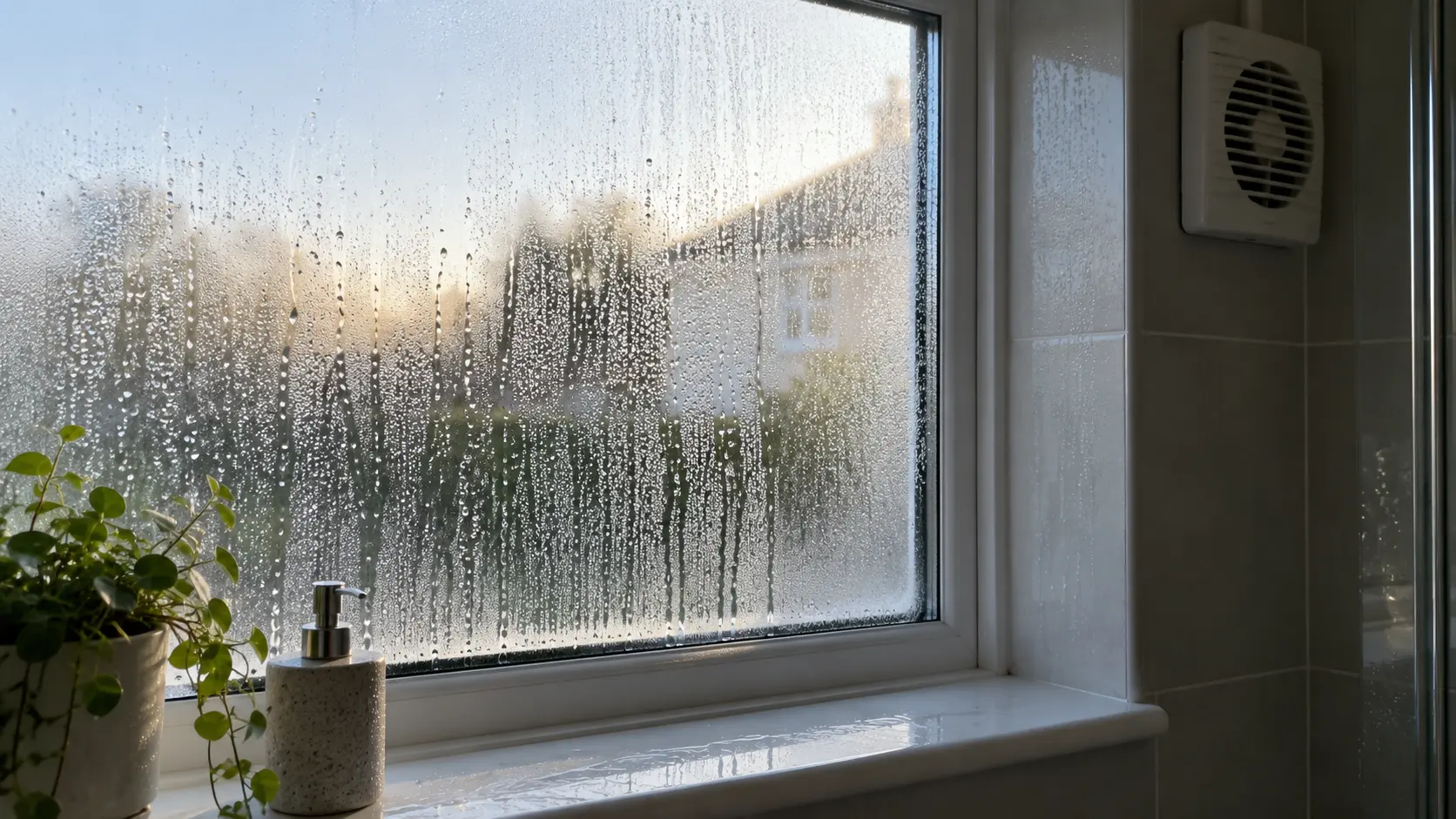
Introduction to Condensation and Why It Happens
Condensation forms when warm air hits a colder surface. The air cannot hold as much moisture at lower temperatures, so the water vapour turns into droplets. That’s why you see it on windows first thing in the morning or on cold tiles in the bathroom.
Everyday activities produce a surprising amount of moisture:
- Showering or running a bath
- Cooking on the hob
- Drying clothes indoors
- Even breathing while you sleep
In a typical three-bedroom house, a family can produce several litres of moisture a day. If that moisture cannot escape, it settles on the coldest surfaces in the property.
Modern homes with good insulation and new windows are more airtight, which is great for heating bills but not so great if ventilation is poor. Older homes can have similar problems if trickle vents are blocked or chimneys have been sealed up without alternative airflow.
Common Signs and Causes of Condensation in the Home
Most homeowners spot condensation when they see water on the inside of windows. By that stage it has often been building up quietly elsewhere.
Typical signs
If you notice any of the following, condensation is likely the culprit:
- Water droplets on windows in the morning
- Black mould around window frames or silicone seals
- Mould spots on ceilings, especially in bathrooms
- A musty smell in wardrobes or corners of rooms
- Peeling wallpaper on external walls
I’m often asked whether this means rising damp. In most cases, especially when the mould is around windows or high up on walls, it’s condensation driven by daily habits and poor ventilation.
Common causes I see
- No extractor fan in the bathroom or fan not working properly
- Extractor linked to the light but switched off too quickly
- Condensing tumble dryer with no ventilation
- Drying clothes on radiators
- Unheated spare rooms that stay cold all winter
Bathrooms are a big one. Even when customers have invested in new suites from quality bathroom suppliers Worcester homeowners trust, the fan specification is sometimes an afterthought. In areas like Warndon Villages and Barbourne I regularly upgrade fans because the original one simply was not powerful enough for a busy family bathroom.
Practical Ways to Reduce and Prevent Condensation
You don’t always need expensive kit. Small changes can make a noticeable difference within weeks.
Improve ventilation first
This is your main defence against condensation.
- Use extractor fans every time you shower or cook
- Leave the fan running for at least 15 to 20 minutes after finishing
- Keep trickle vents in window frames open
- Open a window slightly while cooking if safe to do so
If your bathroom fan sounds weak or is noisy and ineffective, it may need replacing. A modern humidistat fan will switch on automatically when moisture levels rise, which takes the guesswork out of it.
Heat your home more evenly
Cold surfaces attract condensation. Keeping a steady, moderate temperature throughout the home helps.
- Avoid letting one room get very cold while others are warm
- Keep internal doors open where possible to allow air movement
- Use thermostatic radiator valves to balance heat
I often see mould in spare bedrooms because the radiator is turned off all winter. Even a low background heat can reduce the risk.
Change drying habits
Drying laundry indoors is a major contributor. If you can:
- Dry clothes outside when weather allows
- Use a vented tumble dryer or ensure good airflow
- Shut the door and open a window slightly if drying on a rack
Wipe down problem areas
It sounds simple, but wiping condensation off windows and tiles in the morning stops water soaking into seals and frames. Over time that moisture feeds mould growth.
If you are updating your bathroom to make cleaning easier, features like fully tiled walls and good extraction can make a real difference. You can see practical layout ideas at our bathroom showroom or explore accessible options on our mobility bathrooms page if accessibility and ventilation both need improvement.
When to Seek Professional Help
If you have tried improving ventilation and heating but the problem persists, it’s worth getting advice.
You should consider a professional inspection if:
- Mould keeps returning despite cleaning
- You suspect a leak rather than surface condensation
- The extractor fan vents into a loft rather than outside
- There are signs of damp patches that feel wet to touch
I have come across lofts where bathroom fans were simply venting into the roof space. That pushes moist air into insulation and timbers, leading to bigger issues later on.
A proper assessment looks at ventilation, insulation, heating setup and how the property is used day to day. Often it is a combination of small factors rather than one big fault.
Conclusion and Next Steps
Condensation can look alarming, especially when mould appears, but in most homes it is manageable with the right steps. Focus on airflow, steady heating and everyday habits first. Those changes alone can dramatically reduce moisture levels.
If you are unsure whether you are dealing with simple condensation or a deeper damp issue, getting experienced advice can save you time and frustration. At Enviroplumb we have worked in homes across Worcester and the surrounding areas for years, helping homeowners sort out ventilation, heating balance and bathroom extraction problems properly.
Not sure if it’s condensation or something more serious? Get in touch and we’ll come and take a look at what’s causing it.