



If you’re planning a new bathroom, tiles are one of the biggest decisions you’ll make. They affect how the room looks, how it feels underfoot and how much time you’ll spend cleaning it over the years. I’ve worked alongside plenty of homeowners booking a bathroom tiling service, and the same question comes up time and again: natural stone or porcelain?
Both are popular for good reason. Both can look fantastic. But they’re very different when it comes to maintenance, cost and how they cope with daily family life. Here’s a straightforward comparison to help you decide what will actually suit your home.
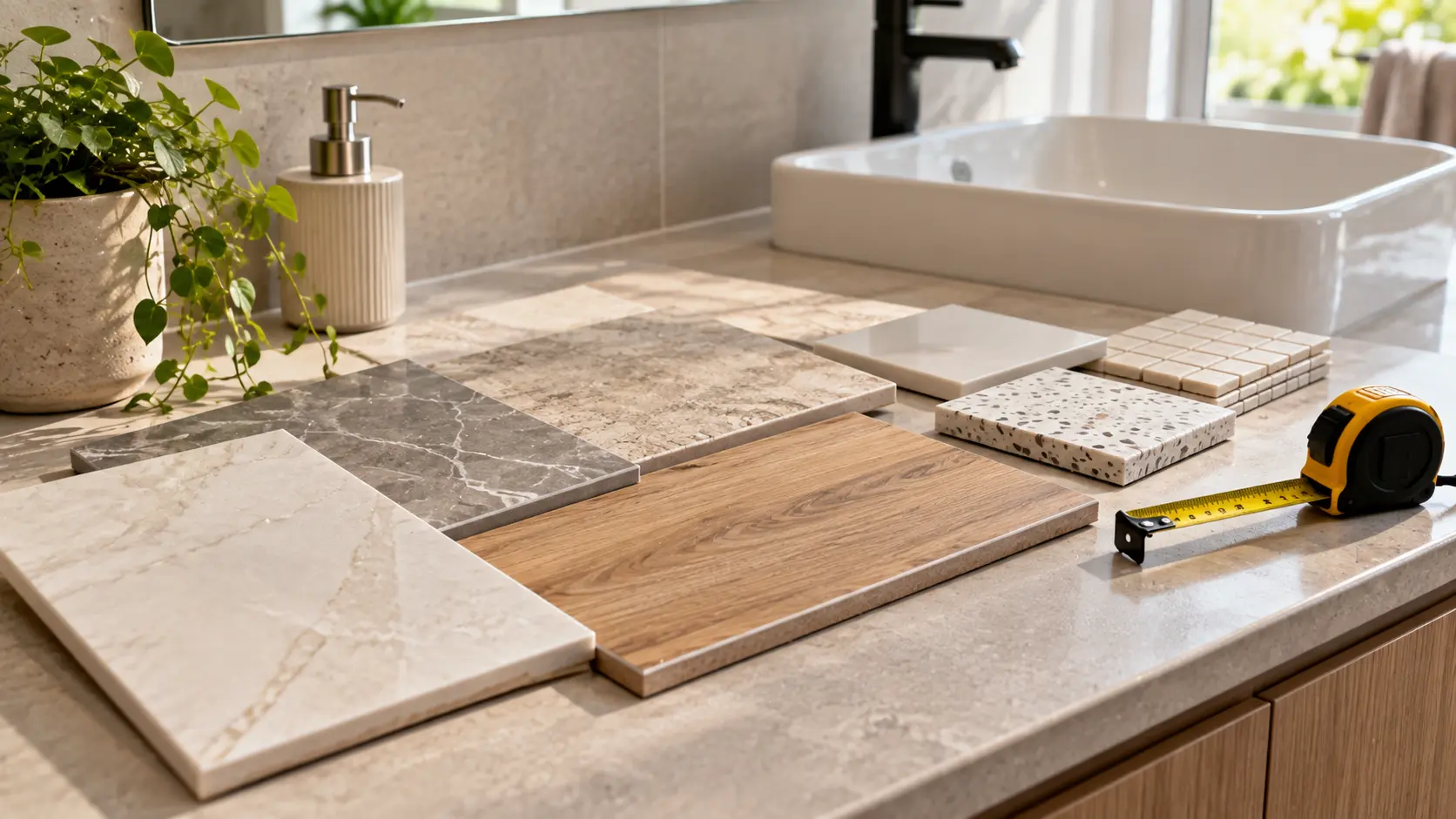
Why Tile Choice Matters in Bathrooms
A bathroom is a high moisture space. Steam from showers, splashes from the basin and the odd puddle from the kids all test your surfaces every day. Unlike a living room floor, bathroom tiles need to cope with constant damp and frequent cleaning.
I’ve visited homes in St John’s and Barbourne where beautiful stone floors have stained simply because they were not sealed properly. I’ve also seen budget porcelain tiles laid badly that cracked within a year. The material matters, but so does how it’s installed.
Natural Stone Tiles: Benefits, Drawbacks and Ideal Uses
The Benefits of Natural Stone
Natural stone has a character you simply cannot replicate completely. Marble, limestone, slate and travertine all have subtle colour changes and unique veining. No two tiles are identical.
If you’re after a spa style bathroom or a traditional feel in a period property, stone can look superb. In older Worcester homes with high ceilings and larger bathrooms, stone often complements the character nicely.
- Every tile is unique
- Gives a high end, natural appearance
- Works beautifully in larger bathrooms
- Adds warmth and texture
The Drawbacks of Natural Stone
Stone is porous. That means it absorbs water unless it’s sealed correctly. Even when sealed, it needs resealing periodically. This is the bit some homeowners do not realise at the start.
It can also stain. Hair dye, strong cleaning products or even some soaps can mark certain types of stone. I had a customer in Warndon who didn’t realise her new limestone floor needed a specific cleaner and it dulled within months.
Stone is generally more expensive too, both for the materials and installation. It often requires more preparation and care during fitting.
Best for:
- Main family bathrooms where appearance is the top priority
- Ensuites with lighter use
- Homeowners happy to keep up with maintenance
Porcelain Tiles: Advantages, Limitations and Where They Excel
The Advantages of Porcelain
Porcelain is a type of ceramic tile fired at a higher temperature, which makes it denser and far less porous than natural stone. In practical terms, that means it handles moisture extremely well.
Modern porcelain tiles are impressive. You can get stone effect, marble effect and even wood effect finishes that look very convincing. Many of my customers choose porcelain because they like the look of stone but want something easier to live with.
- Highly water resistant
- Low maintenance
- Wide range of styles and finishes
- Generally more budget friendly than genuine stone
They are also tough. In busy family homes where bathrooms see constant use, porcelain tends to cope better with knocks, toys dropped on the floor and regular cleaning.
The Limitations of Porcelain
While porcelain can mimic stone, it does not have the exact same natural variation. If you look closely, you can sometimes see repeated patterns across tiles.
Cheaper porcelain options can also feel colder or look slightly flat if you do not choose carefully. That is why visiting a showroom and seeing full size samples laid out properly makes a big difference. It gives you a better sense of how the tiles will look across an entire wall or floor.
Best for:
- Busy family bathrooms
- Wet rooms
- Rental properties
- Anyone wanting minimal upkeep
Natural Stone vs Porcelain Tiles: Key Differences
Cost
Natural stone normally sits at a higher price point for both supply and fitting. The tiles themselves cost more and installation can take longer due to sealing and handling.
Porcelain covers a wide range of budgets. You can choose premium designer ranges or more affordable options without sacrificing performance.
Maintenance
This is often the deciding factor.
Stone needs sealing when installed and resealing over time. You also need suitable cleaning products.
Porcelain is far simpler. Standard bathroom cleaners are usually fine and there is no need for ongoing sealing.
Durability
Both are durable when installed properly. Porcelain has the edge in moisture resistance and resistance to staining.
Stone is strong but can chip and is more vulnerable to marks if not cared for.
Style
Stone offers unmatched natural beauty. Porcelain offers flexibility. You can achieve almost any look, from concrete industrial to classic marble style, often with less ongoing effort.
Which Option Is Right for Your Bathroom?
When customers ask me what I would choose in my own home, I usually start by asking how the bathroom will be used.
If it is a hard working family bathroom with children and daily showers, porcelain is often the sensible choice. It handles moisture better and is easier to clean.
If it is a master ensuite where appearance is the main focus and traffic is lighter, natural stone can create a stunning finish.
The key is proper preparation and installation. Whether you are booking a bathroom tiling service Worcester homeowners trust in areas such as St John’s, Warndon or Barbourne, good surface preparation, correct adhesives and careful sealing make all the difference.
If accessibility is part of your plans, tile choice also plays a role in slip resistance and long term maintenance, especially in mobility bathrooms where safety is key.
Conclusion and Practical Advice
There is no universal right answer. Natural stone offers distinctive beauty and character but needs more care. Porcelain delivers durability, flexibility and ease of maintenance that suits most modern family bathrooms.
If you are unsure, see samples in person, ask about sealing requirements and think honestly about how much upkeep you want. A bathroom should look good on day one and still perform well years later.
If you’re torn between stone and porcelain, get in touch and we’ll talk it through with you, bring some samples and help you pick what suits your bathroom.