



An LPG boiler works almost exactly like a mains gas boiler, but runs on liquefied petroleum gas stored in a tank or cylinders at the property. It’s a popular choice for homes off the gas grid because it gives mains-gas-style heating and hot water, with combi, system and regular boilers all available.
Compared with oil, LPG is cleaner-burning, the boilers are compact, and there’s no risk of oil spills. The trade-offs are the cost of LPG per unit, which varies with the supplier and contract, and the need for a suitable tank location. Our LPG boilers page covers the systems we install.
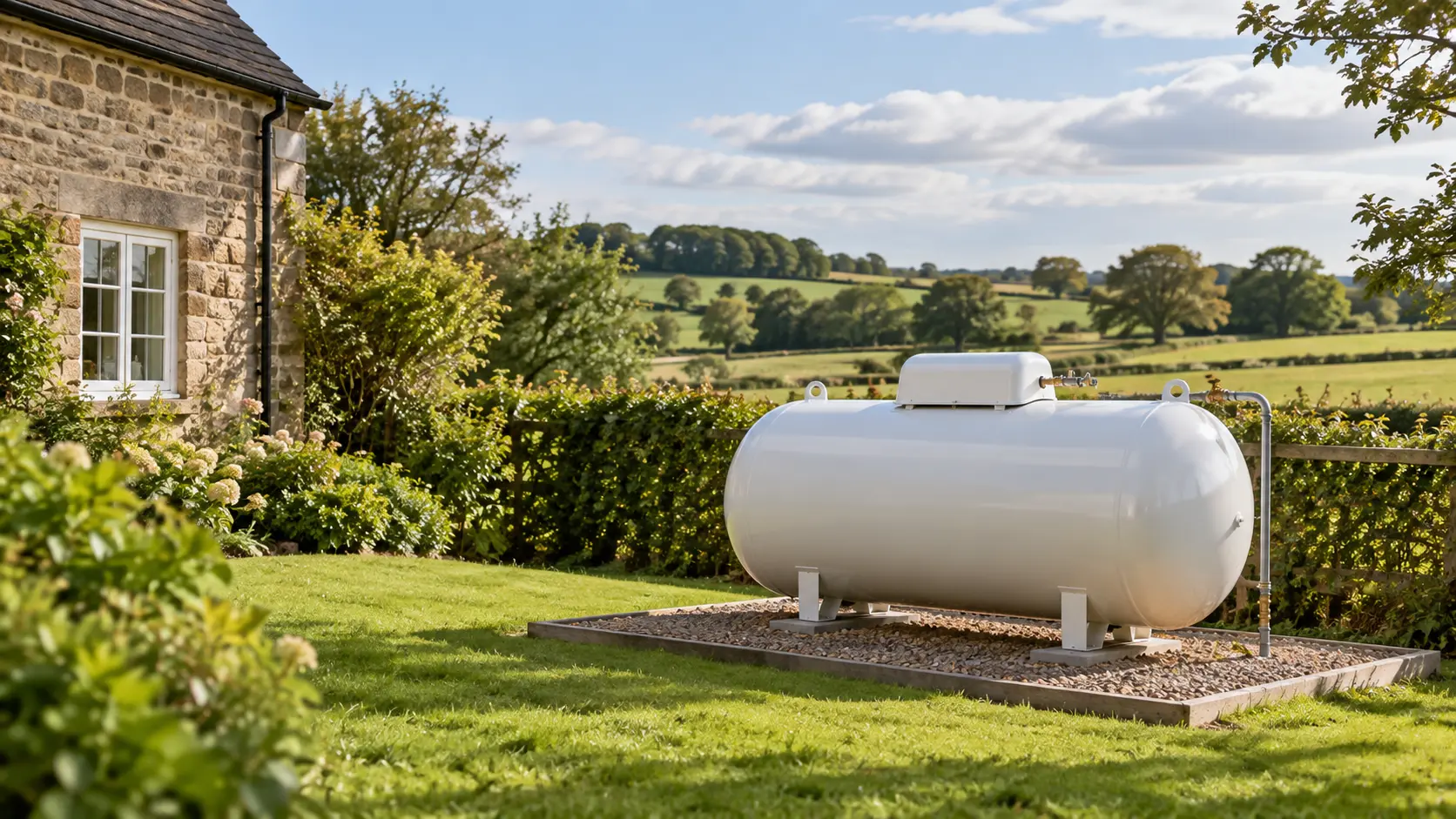
How LPG heating works
LPG is delivered by tanker and stored as a liquid under pressure. It turns back into gas as it leaves the tank and flows to the boiler through a regulator. From there, the boiler works like a natural gas boiler: it burns the gas to heat water for radiators and hot water.
Many modern boilers are available in an LPG version, or can be converted by a suitably qualified engineer using a manufacturer’s conversion kit.
LPG vs oil vs electric for off-grid homes
| LPG | Oil | Electric | |
|---|---|---|---|
| Storage | Tank (above or below ground) or cylinders | Oil tank (usually bunded) | None |
| Boiler size | Compact, wall-mounted options | Often larger, floor-standing | Very compact |
| Emissions | Lower than oil | Higher | None at the property |
| Fuel supply | Tanker deliveries, often via a supplier contract | Tanker deliveries, buy from any supplier | Grid electricity |
| Servicing | Gas Safe registered engineer | OFTEC registered technician recommended | Periodic electrical checks |
Running costs depend heavily on current fuel prices and your supply arrangement, so it’s worth getting up-to-date quotes rather than relying on old comparisons.
LPG tank options
- Above-ground tanks are the most common and cheapest to install, but need a suitable position with safe clearances from buildings, boundaries and drains.
- Underground tanks hide the tank from view but cost more to install.
- Cylinders can suit smaller homes with lower demand, though they need regular swapping.
Tanks are often supplied and owned by the LPG supplier under a contract. It’s worth reading the terms, especially around minimum usage, price reviews and what happens if you want to switch supplier.
Servicing and safety
LPG boilers need an annual service by a Gas Safe registered engineer who is qualified to work on LPG. The service covers combustion, flue performance, safety devices and gas tightness, just as with mains gas.
LPG is heavier than air, so a leak can collect at low level. If you smell gas, turn off the supply at the tank or cylinder if it’s safe, open doors and windows, avoid switches and naked flames, and call your LPG supplier’s emergency number.
Is LPG right for your home?
LPG tends to suit off-grid homes where:
- You want a compact boiler and the convenience of gas
- There’s space for a tank in a suitable position
- You’re replacing an old oil boiler and would rather not store oil
- You want a combi boiler for hot water on demand
If you’re comparing options, our pages on oil boilers and electric boilers explain the alternatives.
LPG in Worcestershire’s rural homes
Many villages around Worcester, Malvern, Pershore and Evesham aren’t connected to the gas network, so homes rely on oil, LPG or electric heating. When an old oil boiler reaches the end of its life, switching to LPG is one of the options worth pricing, alongside a new oil boiler or a heat pump.
Frequently asked questions
Can a natural gas boiler run on LPG?
Many boilers can be converted, but only using the manufacturer’s approved method and by a Gas Safe engineer qualified for LPG. Some models are sold specifically as LPG versions.
Is LPG safe?
Yes, when properly installed and maintained. Annual servicing, correct tank siting and regular checks keep the risk low. Fit a carbon monoxide alarm near the boiler, as with any gas appliance.
Can I switch LPG supplier?
Often yes, but it depends on your contract and who owns the tank. Check the terms and notice periods before switching.
Talk to us about LPG heating
Thinking about an LPG boiler, or replacing the one you’ve got? Drop us a message and we’ll help you work out the right setup for your home.