



An electric boiler is worth considering where there’s no mains gas, where a flue isn’t practical, or in smaller, well-insulated homes and flats with modest heating demand. They’re compact, quiet, have no flue or combustion, and don’t need an annual gas safety check.
The catch is running costs. Electricity usually costs more per unit than gas, so in a larger or poorly insulated home an electric boiler can be expensive to run. Whether it’s worth it comes down to the size of the home, how well it holds heat, your electricity tariff and what the alternatives are. Our electric boilers page explains the systems we fit.
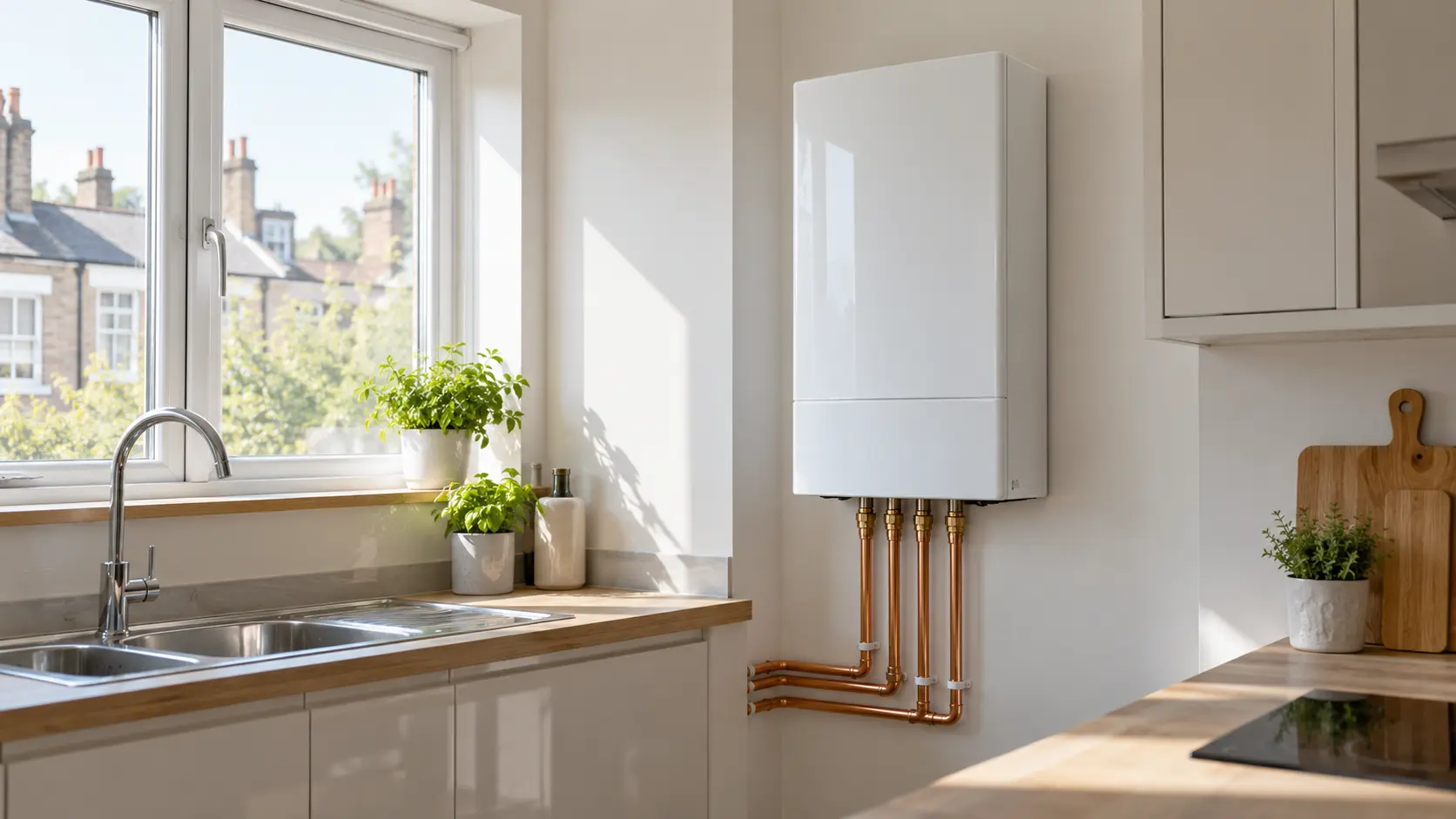
How an electric boiler works
An electric boiler heats water using an electric element, much like a large kettle, and pumps it round your radiators in the same way a gas boiler does. There’s no burner, no gas supply and no flue.
Like gas boilers, they come in different types:
- Direct (combi-style) models heat water for radiators and, in some cases, hot water on demand
- System-style models heat radiators and a stored hot water cylinder
- Storage-type units heat and store water using cheaper off-peak electricity
The advantages
- No flue needed, so they can be fitted in places a gas boiler can’t
- No gas supply required, useful in off-grid homes and some flats
- Very efficient at the point of use, as nearly all the electricity becomes heat in the water
- Quiet and compact
- Lower maintenance, with no combustion to service (they still benefit from periodic checks)
The disadvantages
- Higher running costs in most homes, because electricity is usually dearer than gas per kWh
- Output limits, as larger homes may need more heat than a single-phase domestic supply can easily deliver
- Electrical supply checks, since the home’s supply and consumer unit need to cope with the load
- Hot water limits on direct models in homes with high demand
Running costs: what makes the difference
| Factor | Effect on running cost |
|---|---|
| Size of home | Larger homes need more heat, so bills rise quickly |
| Insulation | Good insulation reduces heat demand significantly |
| Tariff | Off-peak or time-of-use tariffs can reduce costs for storage-type systems |
| Heating habits | Steady, well-controlled heating costs less than long periods at high temperatures |
| Solar PV | Home-generated electricity can offset some costs |
Anyone quoting a precise saving without looking at your home and tariff is guessing. It’s worth comparing unit rates for electricity against your current fuel before switching.
Electric vs gas, oil and LPG
For a home already on mains gas, a gas boiler will usually be cheaper to run. Off the gas grid, the comparison is closer. Many homes around Worcestershire’s villages rely on oil or LPG, and electric can be a practical alternative where an oil tank is ageing, space is tight or you’d prefer not to store fuel. A heat pump is also worth considering, as it uses electricity more efficiently.
If you’re comparing options, our pages on oil boilers and LPG boilers explain the alternatives.
When an electric boiler makes most sense
- Flats and apartments where a gas flue isn’t allowed or practical
- Smaller, well-insulated homes with modest heating demand
- Annexes, garden rooms and extensions
- Off-grid homes wanting to avoid storing oil or LPG
- Homes with solar PV or on a suitable off-peak tariff
Questions to ask before switching
- Can the home’s electrical supply handle the boiler?
- What will the running costs be on my tariff?
- Does the boiler provide hot water, or will I need a cylinder?
- Would a heat pump be a better long-term option?
- What changes are needed to pipework and controls?
Frequently asked questions
Do electric boilers need servicing?
They don’t need a gas safety check, but manufacturers usually recommend periodic servicing to check electrical connections, controls and system pressure, and to keep the warranty valid.
Can an electric boiler work with my existing radiators?
Usually, yes. Electric boilers connect to a wet radiator system in much the same way as gas boilers. Your installer should check the system is in good condition.
Are electric boilers better for the environment?
They produce no emissions at home. Their overall carbon footprint depends on how the electricity is generated, which has been getting cleaner in the UK over time.
Get advice for your home
Weighing up an electric boiler for your home in Worcester, Malvern or the surrounding area? Get in touch and we’ll talk it through with you.