If you’re planning a new bathroom, one of the first big decisions is style. Do you go classic and timeless or clean and modern? We’re often asked this when discussing a bespoke bathroom design, especially by homeowners who want something that will still look good in ten or fifteen years’ time.
The truth is, there’s no single “right” answer. It depends on your home, your taste and how you actually use the space day to day. Below, we’ll break down the differences between traditional and contemporary bathrooms, the pros and cons of each and how to decide what works best for you.
Introduction to Traditional vs Contemporary Bathroom Styles
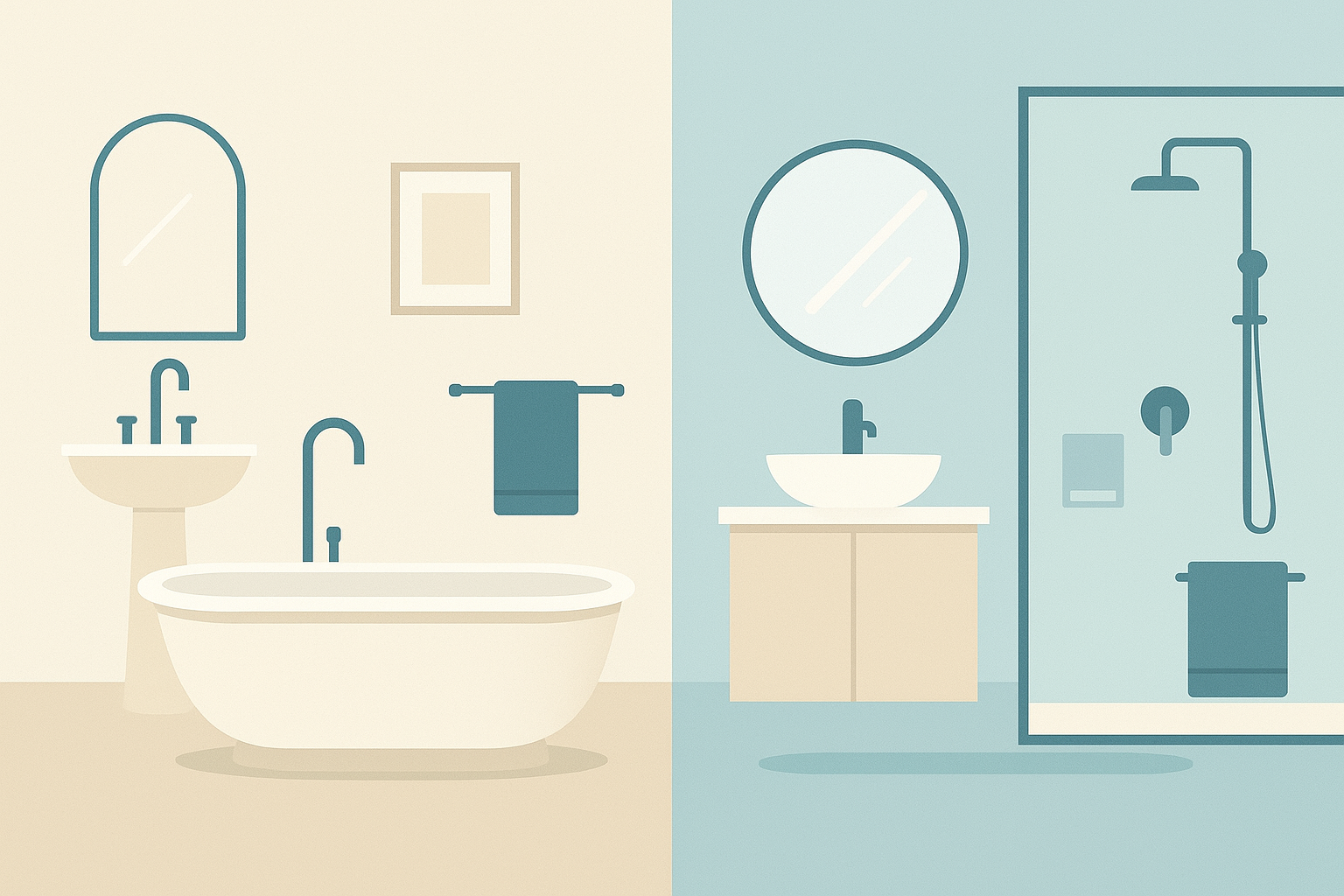
A traditional bathroom usually takes inspiration from Victorian or Edwardian design. Think roll top baths, classic tiling and fittings with a bit of shape and character to them.
A contemporary bathroom leans the other way. Cleaner lines, minimal detailing and often a more streamlined feel. Wall hung furniture, walk in showers and concealed pipework are common features.
In areas like Droitwich, we see a real mix. Period terraces tend to suit traditional features beautifully, while newer builds and renovated properties often lend themselves to a more contemporary look. For homeowners locally, it often comes down to whether they want to complement the age of the property or create contrast. If you’re based nearby, you can pop into our bathroom showroom.
Key Features of Traditional Bathrooms
Traditional bathrooms focus on detail. They feel solid and established, even when newly installed.
Common elements include:
- Freestanding or roll top baths
- High level or close coupled WCs with traditional styling
- Pedestal basins
- Crosshead taps in chrome, nickel or brass
- Panelled walls or half height tiling
- Patterned floor tiles
We often fit traditional radiators with a towel rail built in, which not only look the part but give a solid heat output in older properties that can be a bit draughty.
This style works particularly well in homes with original features. High ceilings, sash windows and fireplaces all sit naturally alongside a more classic bathroom layout.
Key Features of Contemporary Bathrooms
Contemporary bathrooms are all about simplicity and function. Clean lines and uncluttered surfaces are key.
Typical features include:
- Wall hung vanity units
- Countertop basins
- Concealed cisterns
- Large format tiles
- Frameless walk in showers
- Recessed storage niches
Lighting plays a big role too. LED mirrors, recessed ceiling spots and under unit lighting can completely change how the room feels, especially in the evening.
Contemporary designs also tend to maximise space. In smaller bathrooms, floating furniture and clear glass screens keep the room feeling open rather than boxed in.
Pros and Cons of Each Style
Traditional bathrooms
- Pros: Timeless appearance, suits period homes, adds warmth and character.
- Cons: Can feel busier, fittings are sometimes larger so not ideal for tight spaces, certain finishes may need a bit more upkeep.
Traditional suites can also involve more exposed pipework, which needs careful planning. In older homes this is rarely an issue, but in modern houses it sometimes requires adjustments to keep everything looking balanced.
Contemporary bathrooms
- Pros: Sleek and simple, great for small rooms, easy to clean surfaces, often integrates smart storage.
- Cons: Can feel clinical if not softened, trends may date faster than classic designs.
We sometimes see ultra modern bathrooms installed ten years ago that now feel slightly tired because the finish was very trend led at the time. Choosing neutral tiles and quality brassware helps avoid that problem.
How to Choose the Right Style for Your Home
When customers ask us which direction to go in, we usually start with a few practical questions.
- How long are you planning to stay in the property?
- Is this a family bathroom, en suite or cloakroom?
- Do you have original features worth complementing?
- How much storage do you need day to day?
If you’re renovating a Victorian property in Droitwich with original cornicing and cast iron fireplaces, a fully minimalist bathroom can sometimes feel slightly out of place. On the other hand, in a newer estate property, an ornate traditional suite might jar with the rest of the house.
It’s also worth considering practical needs. For example, if future proofing is important, you might want to explore options such as level access showers or supportive layouts as seen in mobility focused designs like these mobility bathrooms. Style still matters, but usability comes first.
Combining Styles: Transitional Bathroom Ideas
You don’t actually have to choose one camp or the other. Some of the best bathrooms we install blend elements of both.
For example, a freestanding bath paired with large format neutral tiles. Or a traditional style vanity unit matched with sleek wall mounted taps. This approach keeps things interesting without going over the top.
We’ve completed projects locally where customers wanted a nod to classic design but with modern convenience. Concealed shower valves behind traditional style controls are a good example. You get the look without sacrificing performance.
If you’re in the area and looking for inspiration, our work across Droitwich shows how different styles can be adapted to suit property type and budget.
Conclusion and Next Steps
Choosing between traditional and contemporary bathrooms comes down to how you want the space to feel every time you walk into it. Warm and classic, or crisp and modern. Both can be practical and both can add value when designed properly.
The key is thinking beyond the showroom look and considering your home, your lifestyle and how the room will age. A well planned bathroom should still feel right years down the line.
If you’re weighing up your options and want straightforward advice from a team of bathroom designers and fitters that works in homes across Droitwich and the surrounding areas every week, the team at Enviroplumb can help you plan a design that genuinely suits your property.
Get in touch today to discuss your new bathroom