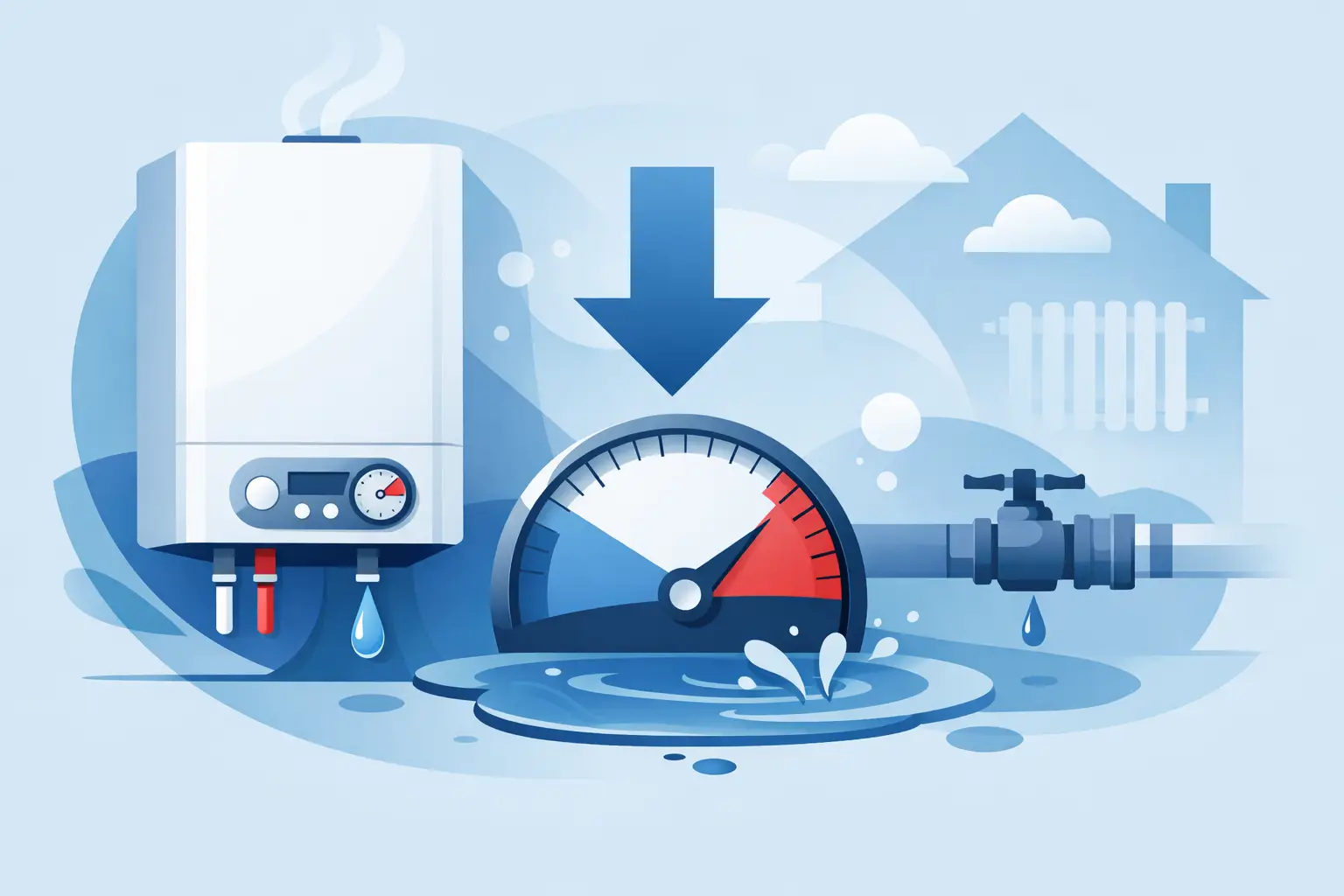
A boiler that keeps dropping pressure is rarely something to ignore. If you are asking why is boiler losing pressure, the short answer is that water is escaping somewhere in the heating system, or the boiler is not managing normal pressure changes as it should. Sometimes the fix is simple. Sometimes it points to a fault that needs a qualified heating engineer.
The pressure gauge on most domestic boilers should usually sit around 1 to 1.5 bar when the system is cold, although the exact range can vary by manufacturer. If it falls too low, the boiler may stop working properly, lock out, or struggle to heat your home consistently. Repressurising may get you going again, but if the pressure keeps dropping, the real cause still needs attention.
Why is boiler losing pressure in the first place?
Boiler pressure drops because a sealed heating system depends on the correct volume of water being held under controlled pressure. If even a small amount of water escapes, the gauge will begin to fall. That loss may come from a visible leak, an internal boiler fault, or a component that no longer copes with expansion and contraction as the system heats up and cools down.
A one-off drop after bleeding radiators is not unusual. A repeated loss of pressure is different. That generally means there is a fault somewhere in the boiler or heating circuit.
The most common causes of low boiler pressure
A leak somewhere in the heating system
This is one of the most common explanations. Water can escape from radiator valves, pipe joints, towel rails, underfloor heating connections, or from the boiler itself. Not every leak is obvious. A slow seep under floorboards or behind boxed-in pipework may leave no obvious puddle but still reduce system pressure over time.
You might notice staining on ceilings, patches on carpets, corrosion around valves, or a regular need to top the boiler up. Even a small leak should be dealt with promptly because it can lead to damage elsewhere in the property as well as ongoing boiler problems.
Recently bled radiators
If you have released air from your radiators, the system pressure often drops afterwards. That is normal, because you have let air out of a sealed system and may have reduced the internal pressure slightly. In that case, repressurising the boiler may be all that is needed.
What matters is what happens next. If the pressure stays stable after topping up, that is usually straightforward. If it starts falling again within days or weeks, there is likely another issue.
A faulty pressure relief valve
The pressure relief valve is a safety device designed to release water if the boiler pressure becomes too high. If that valve develops a fault or does not reseat properly after opening, it can continue to let water out slowly. This often happens through a copper discharge pipe on an outside wall.
Because the water may be dripping externally, homeowners do not always connect it with a pressure loss indoors. If the pipe is dripping when the system is cool, that needs professional investigation.
The expansion vessel has lost its charge
Inside many modern boilers there is an expansion vessel. Its job is to absorb the increase in water volume as the system heats up. If the vessel loses its air charge or its internal diaphragm fails, pressure can swing too much when the boiler is running. That can trigger the pressure relief valve, which then causes water loss and leaves the pressure low once the system cools.
This is a very common fault on ageing boilers. It is repairable in many cases, but it does need proper diagnosis.
A problem with the filling loop
The filling loop is used to top the system up to the correct pressure. If it is not closed properly after use, or if there is an issue with the valves, it can contribute to pressure problems. In some situations, a passing valve can also create erratic readings or allow pressure changes that mask the real fault.
This is one reason it is worth having the system checked rather than simply topping it up again and again.
Bleeding automatic air vents or internal boiler faults
Some systems and boilers have automatic air vents that release trapped air. If one of these starts leaking, pressure can fall gradually. Internal components such as the heat exchanger can also fail, although that is usually less common than leaks, expansion vessel faults, or pressure relief valve issues.
With older boilers especially, several small faults can appear together. That is where proper fault-finding matters.
What you can safely check yourself
There are a few sensible checks a homeowner or landlord can make before booking a repair. Start with the pressure gauge. If it is below the recommended range, check your boiler manual for the correct cold pressure.
Have a careful look around visible radiators, valves and exposed pipework. You are looking for drips, greenish deposits, rust marks or damp patches. Check beneath the boiler as well. Outside, if there is a copper discharge pipe through the wall, see whether it is dripping.
If you have recently bled radiators, it may simply need repressurising once. Use the filling loop only if you are confident and following the manufacturer’s instructions. Do not keep topping the system up repeatedly as a long-term workaround. Fresh water entering the system again and again can increase corrosion and may make the underlying fault worse.
When low pressure becomes a safety and repair issue
Low pressure itself does not always mean the boiler is unsafe, but it does mean the system is not operating as intended. A boiler that continually loses pressure can stop heating your home, develop further component wear, or hide a leak that causes wider damage.
If you have a gas, oil or LPG appliance, any repair involving internal boiler components should be left to a properly qualified engineer. The same applies if the boiler is showing fault codes, making unusual noises, or losing pressure rapidly. For sealed systems, repeated pressure loss is a fault symptom, not a maintenance routine.
Why simply repressurising is not a real fix
Many homeowners discover that topping the boiler back up gets the heating on again, at least for a while. That can make the issue feel minor. In practice, repeated repressurising is only resetting the symptom.
If there is a leak, the water is still escaping. If the expansion vessel has failed, pressure will continue to fluctuate. If the relief valve is passing, the system will keep losing water. Leaving it too long can turn a manageable repair into a larger one, particularly if hidden leaks start affecting floors, ceilings or décor.
Why is boiler losing pressure more in winter?
This question comes up often because faults are more noticeable when the heating is working harder. In colder months, boilers cycle more frequently and the system experiences more expansion and contraction. Weak components, marginal seals and underperforming vessels are more likely to show up.
That does not always mean winter caused the fault. It often means the existing issue has become harder to ignore.
Repair or replace?
It depends on the age of the boiler, the nature of the fault and the overall condition of the heating system. A leaking radiator valve or a recharge to an expansion vessel may be a straightforward repair. A much older boiler with recurring faults, poor efficiency and obsolete parts may be a better candidate for replacement.
This is where an experienced heating engineer adds real value. The right advice is not always to replace immediately, and it is not always to keep repairing. The best decision balances safety, reliability, running costs and the likely lifespan left in the appliance.
For homeowners across Pershore, Worcester, Evesham, Malvern and the surrounding area, a professional inspection can often identify whether the issue sits with the boiler itself or the wider heating system. Companies such as Enviroplumb Ltd approach that properly, with fault diagnosis, repair advice and installation support where replacement is the smarter long-term option.
Preventing future pressure loss
Regular boiler servicing helps catch the kinds of issues that often lead to pressure problems, especially worn seals, faulty vessels and discharge issues. It also gives you a chance to spot corrosion, air build-up and small leaks before they become disruptive.
If your radiators need bleeding often, some areas are heating unevenly, or the system has ongoing sludge and circulation issues, it is worth looking at the wider health of the heating circuit too. Pressure loss is sometimes one symptom of a system that needs more than a quick top-up.
If your boiler keeps losing pressure, the main thing is not to ignore the pattern. A stable heating system should not need regular intervention, and the sooner the cause is found, the easier it usually is to put right.